Dr. Thomas Rohrer, Dermatologic Surgeon:
Sure, well, tattooing can be done in a couple of different ways. One very crudely, you can put anything into the skin with ink on it and create a little deposit and create some color there. So an amateur tattoo.
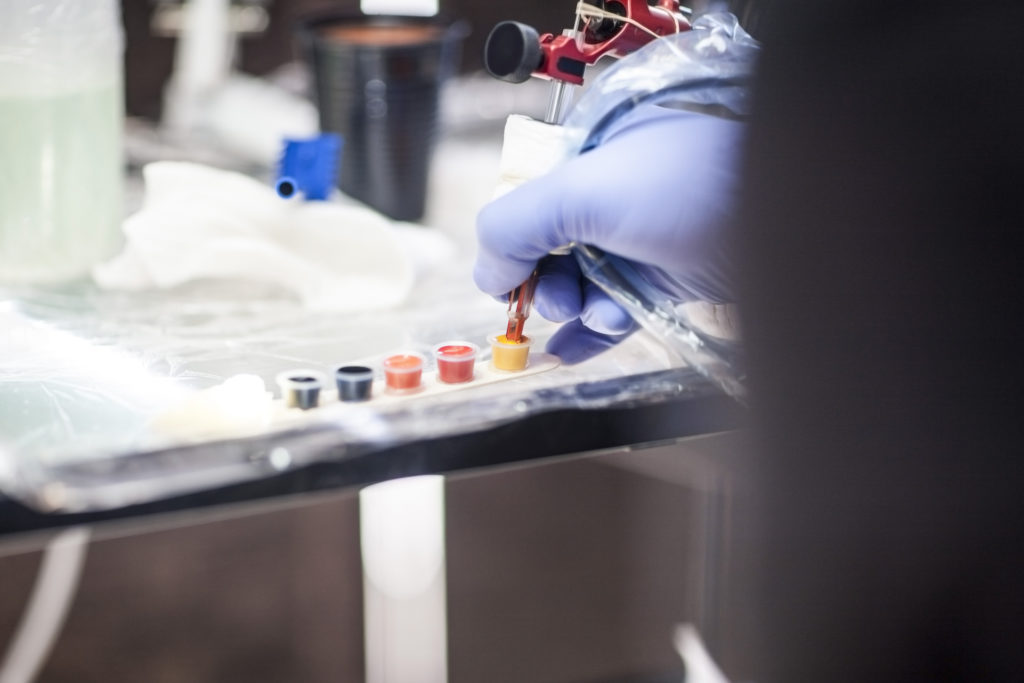
But the professionals use a machine that has a whole bunch of needles in it kind of like a sewing machine that goes in and out of the skin and deposits ink of different colors at different depths to give you a more colorful picture.
So the risks for tattoos, I guess, start initially with infection. All right, so since that tattoo needle or whatever device they're using to get into the skin has to penetrate the skin, you can potentially inject some bacteria or virus into the skin and then cause a problem. So there have been certainly a number of cases of bacterial infections, or viral infections, including hepatitis.
And then down the road, what happens with the ink, there can also be problems, some of those inks, some people are allergic to in this country and around the world. And they have these anything from a mild to a really massive allergic reaction to the ink that's gone into their skin, which causes burning, itching, sometimes ulceration and scarring with that.
One of the other issues we've been seeing with the tattoo, particularly when people get a big tattoo, like a sleeve covering a large area is they cover a good portion of their skin. So if that patient were to develop melanoma in that area, it's very difficult for the patient to see that and for the physician to see it.
There also been cases of tattoos reacting when someone goes for an MRI, which can be an issue. And lastly, there's some question about some of these tattoos potentially leading to cancer down the road.
ncG1vNJzZmivp6x7sa7SZ6arn1%2Bjsri%2Fx6isq2ejnby4e8eormaZXaGupLeMqJ1mqpWcwq2t06Kmp2WWpL9uwMCtq6inXZ67rHnPrqusZZGisrO1wpqlrGWYmq6twMdmmK1lop7ArA%3D%3D